

Have you ever noticed how naturally we focus on outward appearances?
 We judge success by what people accomplish and evaluate character by what we can see. We often assume that if we can fix outward behavior, we’ve solved the problem.
The religious leaders in this passage thought in much the same way.
They criticize Jesus’ disciples because they are not following the ceremonial traditions surrounding handwashing. These traditions were not God’s commandments but human regulations that had grown up around them. The leaders believed that outward practices made a person clean before God.
Jesus responds with strong words.
He accuses them of honoring God with their lips while their hearts are far from Him. In their zeal to keep human traditions, they had actually set aside God’s Word.
Then Jesus makes a statement that would have shocked His listeners.
“It is not what goes into a person from outside that defiles him, but the things that come out of a person are what defile him.”
Later, He explains what He means.
Evil thoughts, sexual immorality, theft, murder, greed, envy, pride, deceit—these and many other sins do not come from outside us. They come from within.
Jesus is identifying humanity’s real problem.
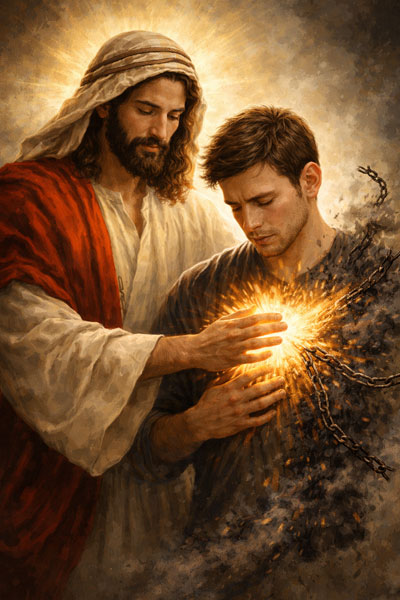
Our greatest need is not better habits or better circumstances. It is a new heart.
That truth is not always easy to hear.
We naturally want to believe that our problems are mostly outside of us.
Jesus lovingly but honestly points us somewhere deeper.
Sin lives in every human heart.
In addition to thinking we can fix our problems because they are external, sometimes we even think we can judge God’s Word and determine what is good and what isn’t. We say things like,
“I don’t think that behavior or belief is bad. It seems fine to me. So, the Bible must be wrong about that.”
 But we are in no position to judge God’s Word because our minds, hearts, and emotions are all corrupted by sin.
And because the problem is within us, only someone external to us, Jesus, can provide the solution.
Throughout Mark’s Gospel we have watched Jesus heal diseases, calm storms, cast out demons, and even raise the dead. Here we learn why He came to do all of that.
He came to heal what no physician can heal.
The human heart.
This passage also reminds us why the Gospel is such good news. If our problem were merely external, perhaps we could fix it ourselves. But if the problem is within us, then we need a Savior who can do what we cannot.
That is exactly who Jesus is.
Through His death and resurrection, He not only forgives our sins but also begins the work of making us new. As we continue hearing His Word and receiving His gifts, He is reshaping our hearts to trust Him and to love what is good.
Outward change matters.
But it begins with the inward work of Christ.
Let’s pray…
Lord Jesus,
Thank You for showing me the truth about my heart without leaving me there. Forgive my sins and continue Your work of renewing me through Your Word. Create in me a heart that trusts You and delights in following You.
Amen.
As part of your devotion time, I encourage you to also pray for at least some of the following:
After praying for these people, you may want to finish your devotion time with the Lord’s Prayer…
Our Father, who art in heaven, hallowed be thy name. Thy kingdom come. They will be done, on earth as it is in heaven. Give us this day our daily bread and forgive us our trespasses as we forgive those who trespass against us. Lead us not into temptation but deliver us from evil. For Thine is the kingdom and the power, and the glory, forever and every. Amen.
In Christ’s Service,
Pastor Kurt