


Daily Devotion – His Steadfast Love Endures

What is something you need to hear over and over again?
 Parents repeat things to their children because they’re important. Teachers review lessons because we forget. Even as adults, we set reminders on our phones because knowing something once doesn’t mean we’ll remember it when we need it.
Psalm 136 repeats the same words twenty-six times:
“His steadfast love endures forever.”
After every single statement about what God has done, the people respond with that same refrain.
God created the heavens.
His steadfast love endures forever.
He rescued Israel from Egypt.
His steadfast love endures forever.
He led His people through the wilderness.
His steadfast love endures forever.
He remembered them when they were brought low.
His steadfast love endures forever.
Twenty-six times might seem excessive. We understood the point after the first few, right?
But perhaps that’s exactly why the repetition is there.
We forget.
When life is going well, God’s love can seem obvious. Yet, even then, we can forget it’s coming from God. But when something goes wrong, a prayer isn’t answered the way we hoped, someone we love suffers, or we make a mess of things through our own sin, suddenly, what seemed so certain doesn’t feel certain anymore.
So God gives His people a refrain to come back to.
“His steadfast love endures forever.”
Notice that the psalm doesn’t base God’s love on our circumstances or our faithfulness. It looks at what God has done.
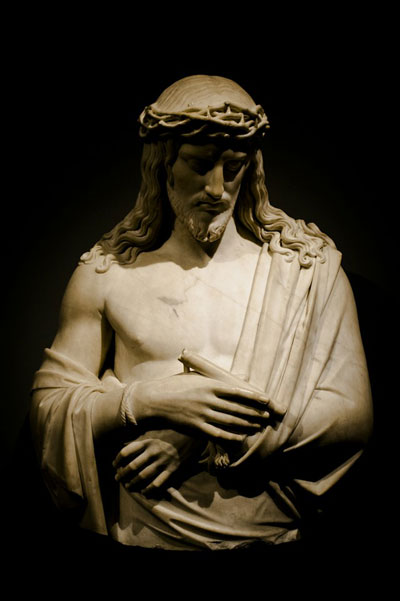 That’s where Christians look too. We look to Jesus. We look to the cross.
If you ever wonder whether God loves you, you don’t have to search your feelings for the answer. How well you think your life is going isn’t a good measure either. You don’t even have to ask whether you’ve been a good enough Christian lately.
Look at Jesus.
God sent His Son for sinners. Jesus took our guilt upon Himself and suffered the judgment we deserved. Then, He rose from the dead, defeating death and securing eternal life for everyone who trusts in Him.
That’s what God’s steadfast love looks like.
There will be days when you feel close to God and days when you don’t. There will be days filled with joy and others filled with disappointment. Your circumstances will change.
Your circumstances and emotions will change. God’s promise does not.
Maybe that’s why we need to hear it twenty-six times.
His steadfast love endures forever.
Let’s pray…
Heavenly Father,
Thank You for Your steadfast love that never comes to an end. When my circumstances or feelings cause me to doubt Your love, turn my eyes again to Jesus and the cross. Help me remember all that You have done for me and trust Your promises in every season of life.
Amen.
As part of your devotion time, I encourage you to also pray for at least some of the following:
- Your family
- Your local church
- Your pastor
- Some of your fellow church members
- The people on your B.L.E.S.S. list
- Your country and her leaders
- Your community
After praying for these people, you may want to finish your devotion time with the Lord’s Prayer…
Our Father, who art in heaven, hallowed be thy name. Thy kingdom come. They will be done, on earth as it is in heaven. Give us this day our daily bread and forgive us our trespasses as we forgive those who trespass against us. Lead us not into temptation but deliver us from evil. For Thine is the kingdom and the power, and the glory, forever and every. Amen.

In Christ’s Service,
Pastor Kurt
 You arrive at the door, but suddenly you start wondering whether you really belong there. Thoughts and fears start running through your mind: Maybe there has been a mistake. Are you dressed appropriately? Should you have prepared something? The closer you get, the more aware you become that you don’t quite measure up.

 Then a scribe asks a sincere question:
 Near the end of the reading, Jesus watches people placing their offerings into the temple treasury. Wealthy people give large amounts, but He draws His disciples’ attention to a poor widow who contributes two tiny coins.
 Psalm 126 gives us a beautiful picture for those seasons.
 And, sometimes, those tears aren’t just tears of frustration, they are tears of sacrifice. We are called to love others with a sacrificial love. Just as the farmer may have to go without some food in order to plant the next harvest, we may need to give of the things that are important, even necessary for us. That could be time, money, physical effort, or carrying an emotional burden with someone.
 You’ve probably heard someone say that. Maybe you’ve even thought it yourself.
 Then God serves you both.
 You don’t have to attend every argument you’re invited to.
 Sometimes wisdom looks like walking away.
 The Lord’s Prayer begins with God’s name, God’s Kingdom, and God’s will. Then Jesus teaches us to pray for our daily needs.
 Evil:
Evil: