



Daily Devotion – The Turning Point

Who do you say Jesus is?
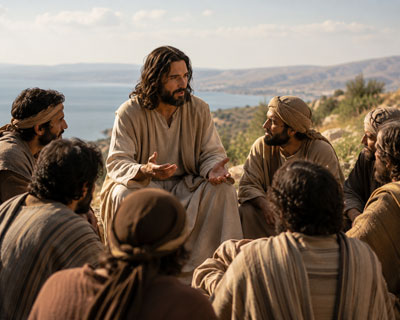 This is one of the most important conversations in the entire Gospel of Mark.
As Jesus and His disciples travel to the villages around Caesarea Philippi, He asks them a simple question:
“Who do people say that I am?”
They give several answers. Some think He is John the Baptist. Others say Elijah or one of the prophets.
Then Jesus makes it personal.
“But who do you say that I am?”
Peter answers,
“You are the Christ.”
For the first time, one of the disciples says it plainly. Jesus is the promised Messiah, the One God had sent to save His people.
Peter’s confession is right, but his understanding is incomplete.
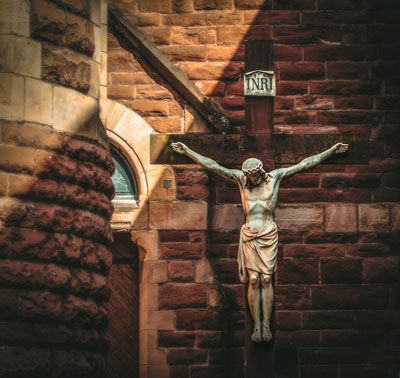 Immediately after Peter’s confession, Jesus begins teaching something His disciples were not expecting. The Christ must suffer, be rejected, be killed, and after three days rise again.
Peter cannot accept that. He rebukes Jesus, because in his mind the Messiah should conquer, not suffer.
Jesus, in turn, rebukes Peter.
“You are not setting your mind on the things of God, but on the things of man.”
The disciples expected a king who would defeat Rome. Jesus came to defeat something far greater: sin, death, and the devil.
The cross was not a tragic interruption to His mission.
It was His mission.
Jesus then turns to the crowd and describes what it means to follow Him.
“If anyone would come after me, let him deny himself and take up his cross and follow me.”
Following Jesus is not simply agreeing with certain truths about Him. It means trusting Him enough to follow wherever He leads, even when His way is different from what we would have chosen. Even if His way leads to suffering or death.
That is possible because the One who calls us to follow is the same One who would suffer and die for us. He’s also the one who would overcome death for us.
He gave up His life so that we might receive ours.
Let’s pray…
Lord Jesus,
You are the Christ, my Savior and King. Keep me from trying to reshape You according to my own expectations. Help me to trust Your saving work on the cross and to follow You in faith wherever You lead.
Amen.
As part of your devotion time, I encourage you to also pray for at least some of the following:
- Your family
- Your local church
- Your pastor
- Some of your fellow church members
- The people on your B.L.E.S.S. list
- Your country and her leaders
- Your community
After praying for these people, you may want to finish your devotion time with the Lord’s Prayer…
Our Father, who art in heaven, hallowed be thy name. Thy kingdom come. They will be done, on earth as it is in heaven. Give us this day our daily bread and forgive us our trespasses as we forgive those who trespass against us. Lead us not into temptation but deliver us from evil. For Thine is the kingdom and the power, and the glory, forever and every. Amen.

In Christ’s Service,
Pastor Kurt

 For many people, it’s watching someone do the wrong thing and seem to get away with it.
 Instead of fretting, he says to trust in the Lord, delight yourself in the Lord, commit your way to the Lord, and be still before the Lord.
 Most of us enjoy seeing quick results.
 Not by your own effort nor by proving yourself worthy. You received Him as a gift through the Gospel. The Holy Spirit created faith through God’s Word and joined you to Christ in Baptism. That seed of the Gospel was planted and watered and took root.
 There’s nothing wrong with making plans.
 That’s good. We should think ahead and prepare. We should use the wisdom God has given us.
 It’s a question many people have asked.
 It is the conversation of children with their Father.
 Moses had every reason to be discouraged.
 It was the Lord.
 That theme appears several times in today’s reading.
 The same is true for us.
 The answer might depend on the season of life you’re in.
 Our deepest need is God Himself.